__What Is Direct Metal Laser Sintering (DMLS)?__

DMLS 3D PRINTING Services

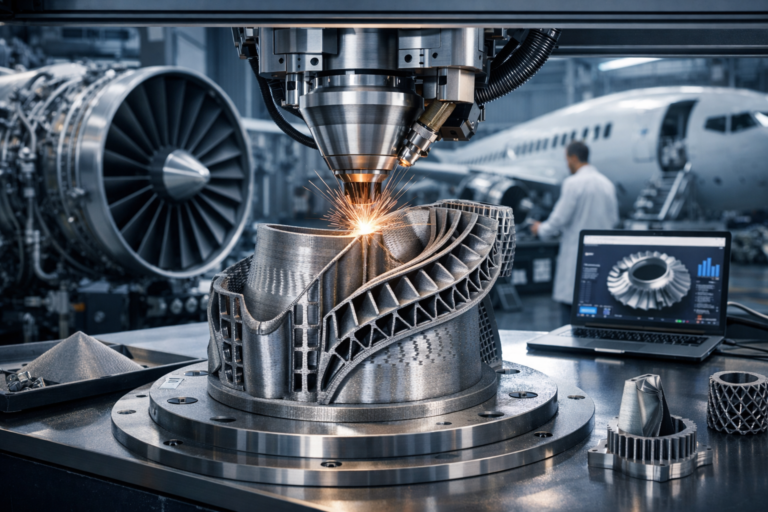
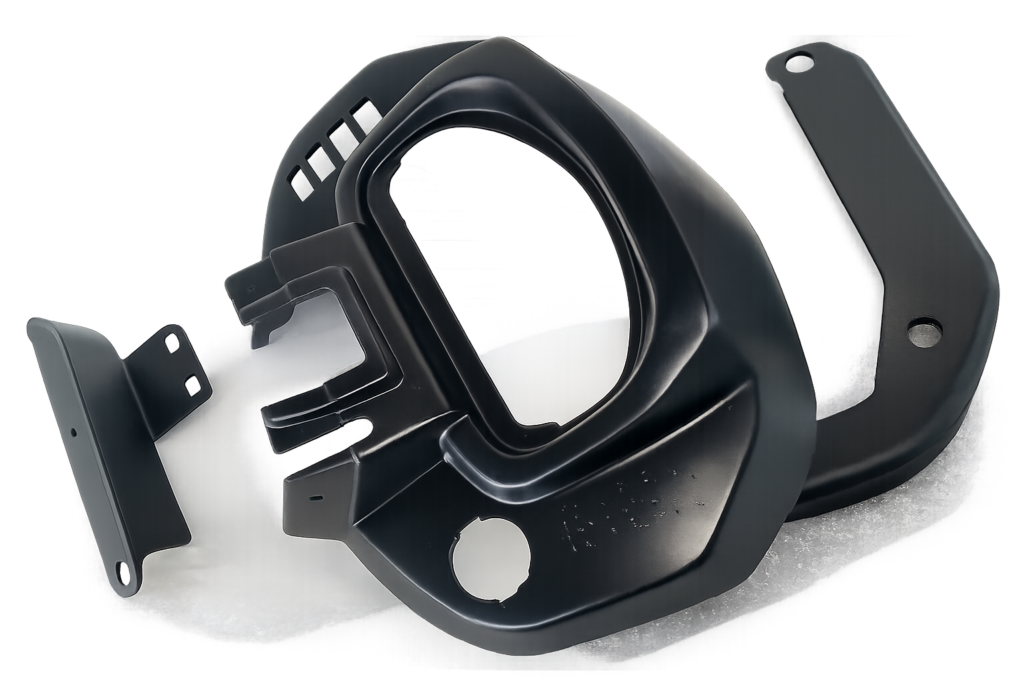
Direct Metal Laser Sintering (DMLS) is a powder bed fusion process where a high-power fiber laser selectively fuses fine metal powder layer by layer inside an inert atmosphere. Each layer is metallurgically bonded to the previous one, resulting in fully dense, isotropic metal parts.

±25μm

Accuracy

24–48hr

Turnaround

12+

Materials

500k+

Parts Delivered
__Why FDM for Additive Manufacturing?__

Production-Ready Direct Metal Laser Sintering (DMLS) for Engineering Applications

At Indium-Protofy3D Our Direct Metal Laser Sintering (DMLS) 3d printing delivers dense, high-strength metal parts with complex geometries that traditional manufacturing cannot achieve. Our DMLS 3D Printing Services enable rapid prototyping, bridge manufacturing, and production of end-use metal components—without molds or tooling.

From aerospace-grade titanium to tool steels and stainless alloys, we deliver engineering-ready metal parts built for demanding industrial applications.

True Production-Grade Metal Parts

Tool-Free & Fast

Tool-Free Manufacturing

Part Consolidation

From Imagination to reality

How DMLS 3D Printing Process Works?

Selective Laser Sintering streamlined workflow designed for efficiency and quality

Powder Bed Layering

A recoating unit spreads a uniform 80μm layer of thermoplastic powder (PA12 or other material) across the entire build platform.

Layer thickness: 80μm | Platform area: 380×284mm

Agent Jetting

Thermal inkjet arrays simultaneously deposit fusing agent on part geometry and detailing agent at boundaries — at 1200 DPI resolution.

Dual-agent system | 1200 DPI resolution

Infrared Fusion

The build platform passes through an infrared energy zone. Fusing agent absorbs IR energy, melting and fusing powder particles into a dense, isotropic solid.

Controlled thermal profile | Full layer fusion

Cooling & Extraction

After the full build completes, the print cake undergoes a controlled cooling cycle to minimise thermal stresses and achieve dimensional accuracy.

Controlled cool-down | 3–8hr post-build cycle

Post-Processing

Parts are removed from the powder cake, media-blasted to remove loose powder, and optionally dyed, coated, or machined to specification.

Bead blast | Dyeing | Coating | Machining

Why Partner with Us for FDM Manufacturing

Engineering-Grade Direct Metal Laser Sintering (DMLS) Manufacturing Capability

Our FDM 3D printing services At Indium-Protofy3D deliver Production-Grade Metal Parts with high strength, heat resistance, and fatigue performance comparable to forged or machined components.

DMLS VS. TRADITIONAL MANUFACTURING

Why leading engineers are switching from CNC machining and investment casting — the quantified case for additive metal manufacturing in production programs.

FeatureDMLS (Our Process)CNC MachiningInvestment Casting
Design Freedom
Unlimited
Highly restrictedModerate
Tooling Cost
Zero
LowHigh ($5K–$100K+)
Lead Time
5–10 days
2–4 weeks6–16 weeks
Material Waste
~5% (powder recycled)
40–90% (swarf)~10%
Internal Features
Full support
Not possibleVery limited
Minimum Order Qty
1 part
1 part100–1,000+ parts
Complex Geometry
Any complexity
Line-of-sight onlyDraft angles required
FDM Design Essentials

Optimizing Part Design Essentials for FDM 3D Printing

Design parts for reliable printing, maximum strength, and dimensional accuracy. Smart geometry, correct orientation, and material-aware design ensure consistent, production-ready FDM results.
__Materials for Functional Performance__

Engineering-Grade Fused Deposition Modeling FDM Materials

Choose from our extensive selection of materials. Each material has unique properties, advantages, and ideal use cases.<br>We offer a wide range of FDM thermoplastics to match functional and environmental requirements:

ENGINEERING-GRADE METAL MATERIALS

Select the optimal alloy for your application from our certified material portfolio — each material traceable to mill certification with full mechanical property data packs.

MaterialTensile StrengthYield StrengthElongationDensityHardness
Stainless Steel 316L480–640 MPa170–310 MPa30–50%7.98 g/cm³160–190 HV
Ti-6Al-4V (Grade 23)1000–1100 MPa880–950 MPa8–14%4.42 g/cm³320–360 HV
AlSi10Mg330–430 MPa220–270 MPa3–9%2.67 g/cm³100–130 HV
Inconel 625830–965 MPa480–520 MPa35–45%8.44 g/cm³220–260 HV
Inconel 7181210–1380 MPa1000–1100 MPa12–18%8.19 g/cm³380–440 HV
Cobalt Chrome (CoCr)1150–1400 MPa750–950 MPa4–10%8.30 g/cm³380–450 HV
Maraging Steel (MS1)1100–2050 MPa1000–1900 MPa4–13%8.05 g/cm³300–600 HV
Tool Steel (H13)1200–1900 MPa1000–1700 MPa2–7%7.80 g/cm³480–560 HV

* Values shown are typical ranges for as-built DMLS parts. Post-processing (HIP, heat treatment) can improve properties. Contact us for material-specific datasheets.

Find your queries

Frequently Asked Question (FAQ)

What is DMLS 3D printing?

Direct Metal Laser Sintering (DMLS) is an additive manufacturing process that uses a high-powered laser to fuse fine metal powder layer-by-layer to produce fully dense metal parts directly from CAD data.

DMLS builds parts additively without tooling, allowing complex geometries, internal channels, and lightweight structures that are difficult or impossible with CNC machining or casting.

DMLS and SLM are often used interchangeably. Both are laser-based metal powder bed fusion processes, although SLM typically refers to fully melting the powder while DMLS sinters/melts depending on parameters.

DMLS is ideal for complex metal components such as aerospace brackets, medical implants, conformal cooling channels, heat exchangers, and lightweight structural parts.

DMLS is ideal for complex metal components such as aerospace brackets, medical implants, conformal cooling channels, heat exchangers, and lightweight structural parts.

What materials are available for DMLS printing?

Common materials include Stainless Steel (316L), Aluminum (AlSi10Mg), Titanium (Ti6Al4V), Inconel (nickel alloys), and tool steels.

Titanium offers high strength-to-weight ratio, corrosion resistance, and biocompatibility, making it ideal for aerospace and medical applications.

Yes. Aluminum alloys provide lightweight properties, good thermal conductivity, and are widely used in automotive and aerospace components.

Yes. DMLS parts are typically near fully dense (≥99%) and exhibit mechanical properties comparable to wrought materials after post-processing.

Yes. Materials like Inconel and tool steels are specifically designed for high-temperature and high-stress environments.

What file formats are accepted for DMLS printing?

Standard formats include STL, STEP, IGES, and 3MF files from CAD software.

Typical minimum wall thickness ranges between 0.5 mm and 1.5 mm, depending on geometry and material.

Typical tolerances range from ±0.1 mm to ±0.2 mm, with tighter tolerances achievable through post-machining.

Yes. Support structures are required to anchor parts to the build plate and manage heat dissipation during printing.

Yes. DMLS enables internal cooling channels, lattice structures, and topology-optimized geometries not possible with traditional methods.

What surface finish do DMLS parts have?

As-built surfaces are typically rough due to partially melted powder particles and layer-based fabrication.

Yes. CNC machining is commonly used to achieve tight tolerances and precision features.

Common processes include support removal, heat treatment, stress relief, machining, polishing, and surface finishing.

Yes. Parts can be polished, anodized, plated, or coated depending on application requirements.

Yes. Heat treatment is often applied to improve mechanical properties and relieve internal stresses.

Is DMLS expensive compared to other 3D printing technologies?

Yes. Metal additive manufacturing is more expensive due to material costs, machine complexity, and post-processing requirements.

Cost depends on material type, part volume, build time, support structures, and post-processing.

For simple parts, CNC is more cost-effective. For complex geometries, DMLS can reduce cost by eliminating multiple machining operations.

Casting is more economical for large production volumes, while DMLS is better suited for low-volume or complex parts.

Yes. By consolidating multiple parts into a single component, DMLS reduces assembly steps and overall system cost.

Blog

The standard Lorem Ipsum passage

Lorem ipsum dolor sit amet, consectetur adipiscing elit, sed do eiusmod tempor incididunt ut labore et dolore magna aliqua. Ut...

Lorem Ipsum

“Neque porro quisquam est qui dolorem ipsum quia dolor sit amet, consectetur, adipisci velit” “There is no one who loves...

Where can I get some?

There are many variations of passages of Lorem Ipsum available, but the majority have suffered alteration in some form, by...

Find answers to common questions about our services, processes, and capabilities.

Frequently Asked Question (FAQ)

What materials can be used in 3D printing?

Lorem ipsum dolor sit amet, consectetur adipiscing elit. Ut elit tellus, luctus nec ullamcorper mattis, pulvinar dapibus leo.

Lorem ipsum dolor sit amet, consectetur adipiscing elit. Ut elit tellus, luctus nec ullamcorper mattis, pulvinar dapibus leo.

Lorem ipsum dolor sit amet, consectetur adipiscing elit. Ut elit tellus, luctus nec ullamcorper mattis, pulvinar dapibus leo.

Lorem ipsum dolor sit amet, consectetur adipiscing elit. Ut elit tellus, luctus nec ullamcorper mattis, pulvinar dapibus leo.

Lorem ipsum dolor sit amet, consectetur adipiscing elit. Ut elit tellus, luctus nec ullamcorper mattis, pulvinar dapibus leo.

Lorem ipsum dolor sit amet, consectetur adipiscing elit. Ut elit tellus, luctus nec ullamcorper mattis, pulvinar dapibus leo.

Lorem ipsum dolor sit amet, consectetur adipiscing elit. Ut elit tellus, luctus nec ullamcorper mattis, pulvinar dapibus leo.

How do I get an invoice?

Lorem ipsum dolor sit amet, consectetur adipiscing elit. Ut elit tellus, luctus nec ullamcorper mattis, pulvinar dapibus leo.

Lorem ipsum dolor sit amet, consectetur adipiscing elit. Ut elit tellus, luctus nec ullamcorper mattis, pulvinar dapibus leo.

Do you offer design services?

Lorem ipsum dolor sit amet, consectetur adipiscing elit. Ut elit tellus, luctus nec ullamcorper mattis, pulvinar dapibus leo.

Lorem ipsum dolor sit amet, consectetur adipiscing elit. Ut elit tellus, luctus nec ullamcorper mattis, pulvinar dapibus leo.

How can I track my order?

Lorem ipsum dolor sit amet, consectetur adipiscing elit. Ut elit tellus, luctus nec ullamcorper mattis, pulvinar dapibus leo.

Lorem ipsum dolor sit amet, consectetur adipiscing elit. Ut elit tellus, luctus nec ullamcorper mattis, pulvinar dapibus leo.

Lorem ipsum dolor sit amet, consectetur adipiscing elit. Ut elit tellus, luctus nec ullamcorper mattis, pulvinar dapibus leo.

What materials can be used in 3D printing?

Lorem ipsum dolor sit amet, consectetur adipiscing elit. Ut elit tellus, luctus nec ullamcorper mattis, pulvinar dapibus leo.

Lorem ipsum dolor sit amet, consectetur adipiscing elit. Ut elit tellus, luctus nec ullamcorper mattis, pulvinar dapibus leo.

Lorem ipsum dolor sit amet, consectetur adipiscing elit. Ut elit tellus, luctus nec ullamcorper mattis, pulvinar dapibus leo.

Image feeds

Gallery Images

Our gallery showcases the precision, creativity, and innovation that 3D printing makes possible.

Ready to Start Your Project?

Get an instant quote by uploading your CAD files. No account required.

    Drop CAD files here or click to browse


    Supported formats: .stl, .step, .stp, .obj, .3mf, .iges

    Maximum file size: 500MB

    Start Manufacturing

    Additive Manufacturing

    On-Demand

    Upload your Design?

    Any Questions?

    From Prototyping to Production, Indium has the technology and capabilities to get your project off the ground.
    Scroll to Top