__What Is FDM (Fused Deposition Modeling ?__

FDM 3D PRINTING Services

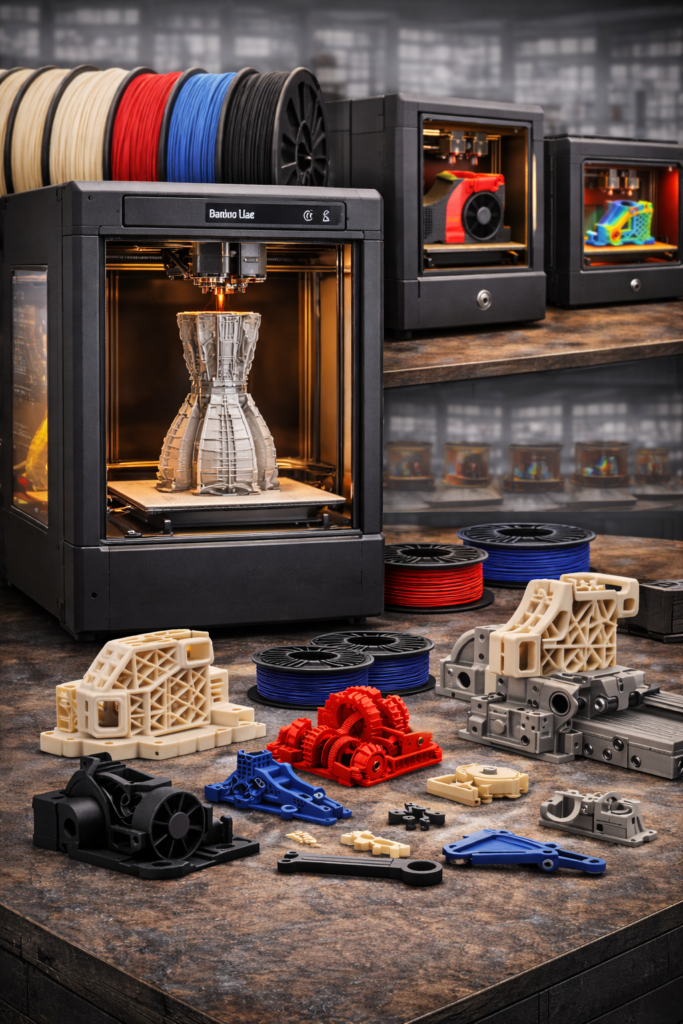
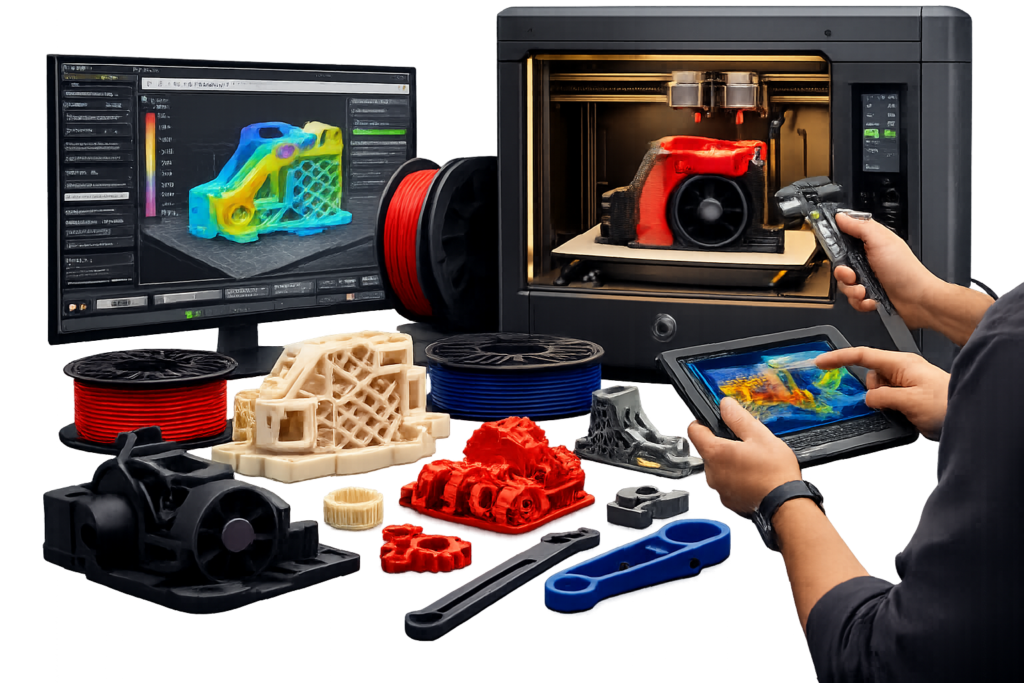
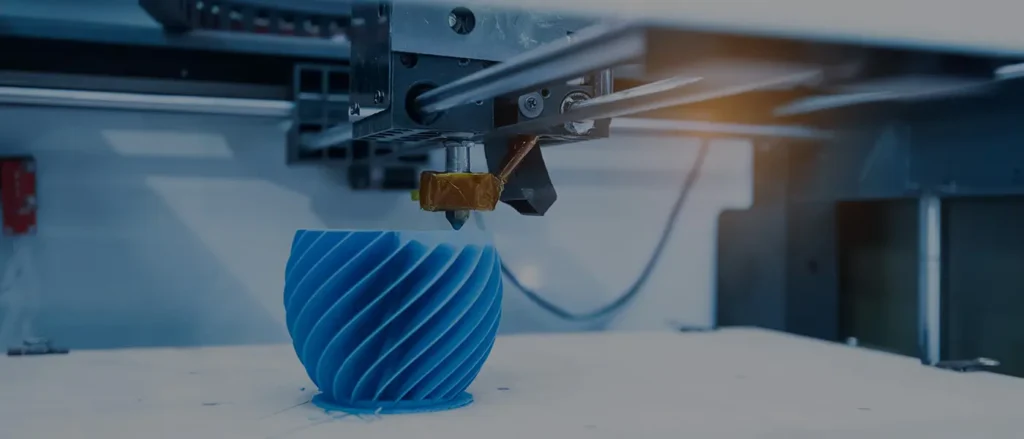
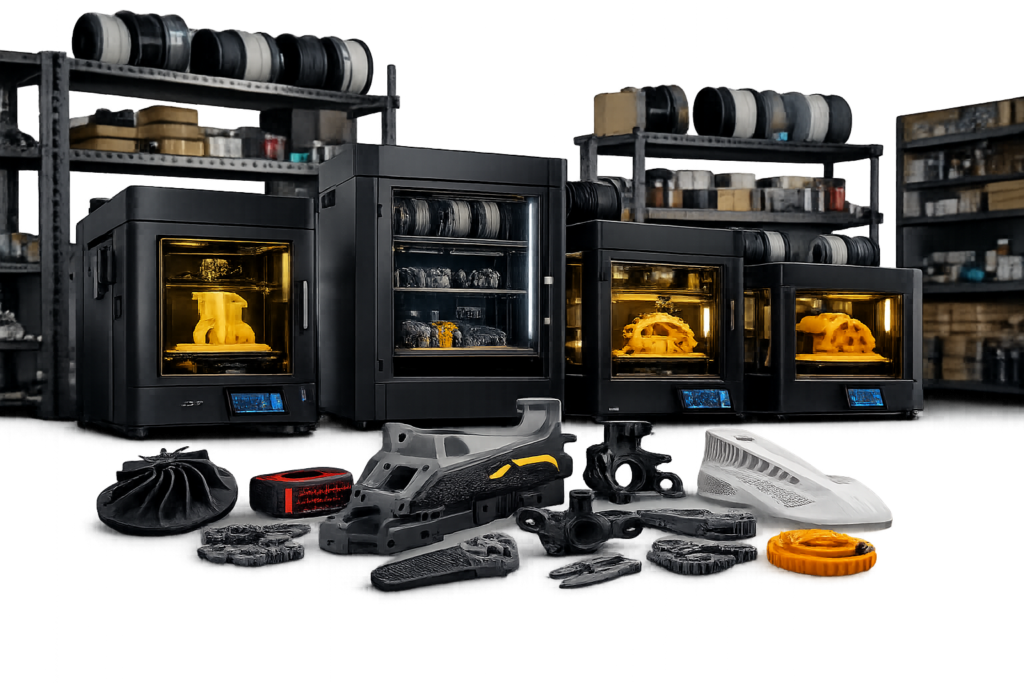
Fused Deposition Modeling (FDM) is a widely used additive manufacturing process that builds parts layer by layer by extruding thermoplastic materials through a heated nozzle

±25μm

Accuracy

24–48hr

Turnaround

12+

Materials

500k+

Parts Delivered

0.1mm

Min Layer 

±0.2mm

Accuracy

24hr

Turnaround

15+

Materials

100k+

Parts Delivered

8+

Post Processing
__Why FDM for Additive Manufacturing?__

Production-Ready Fused Deposition Modeling for Engineering Applications

At Indium-Protofy3D Our FDM additive manufacturing platform delivers repeatable, controlled, and scalable thermoplastic part production for prototyping, tooling, and low-volume manufacturing. 

  • Engineering-grade thermoplastics — Nylon, CF Composites, PC
  • Functional end-use parts with real mechanical properties
  • Rapid iteration cycles — from CAD file to part in hours
  • Large-format builds up to 400mm on any axis

Built to support R&D teams, startups, and OEM manufacturing.

Industrial-Scale Production & Prototyping

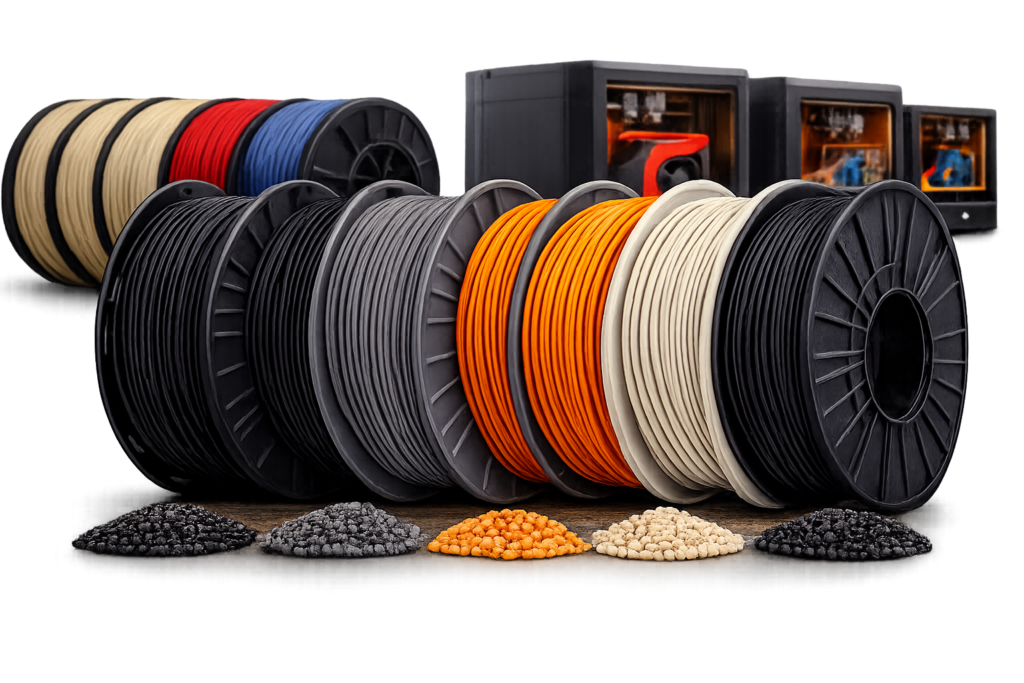
Qualified FDM Materials

Industrial FDM Infrastructure

Design for FDM (DfAM) Engineering Support

__How FDM 3D PRINTING PROCESS WORKS__

From File to Part — Engineered at Every Step

Fused deposition modeling streamlined workflow designed for efficiency and quality

Submit Parts

Upload your CAD files or ship your printed parts to our facility.

Expert Analysis

Our engineers review your requirements and recommend optimal processes.

Processing

State-of-the-art equipment and skilled technicians transform your parts.

Quality Check

Rigorous inspection ensures every part meets your specifications.

Delivery

Fast, secure shipping gets your finished parts back to you quickly.

Why Partner with Us for FDM Manufacturing

Engineering-Grade Fused Deposition Modeling Capability

Our FDM 3D printing services At Indium-Protofy3D deliver reliable, cost-effective, and scalable additive manufacturing solutions for functional prototyping, tooling, and low-volume production.

__Why Choose Us__ The FDM Manufacturing Advantage

Advanced FDM-Manufacturing Infrastructure. Measurable Results

Our fleet of Voron, Bambu X1C, and custom CoreXY machines run 24/7 to hit your deadlines without sacrificing precision.

BENEFITS

  • No support structures needed
  • Strong functional parts
  • Complex geometries
  • Good mechanical properties

LIMITATIONS

  • Matte surface finish
  • Powder handling required
  • Comparatively Expensive
  • Slightly brittle and Can absorb moisture
BUILD_VOLUME
LAYER_RESOLUTION
DIMENSIONAL_ACCURACY
NOZZLE_TEMPERATURES
AVAILABLE_COLORS
FILE_FORMATS
STANDARD_LEAD_TIME
RUSH_LEAD_TIME
POST_PROCESSING
CERTIFICATIONS
__Materials for Functional Performance__

Engineering-Grade Fused Deposition Modeling FDM Materials

Choose from our extensive selection of materials. Each material has unique properties, advantages, and ideal use cases.<br>We offer a wide range of FDM thermoplastics to match functional and environmental requirements:

__MATERIAL SELECTION__

Engineering materials for every application.

Eight engineering-grade thermoplastics covering rigidity, flexibility, heat resistance, and structural composites — each selected for real-world industrial performance. Not sure which material to choose? Our engineers will review your design and recommend the optimal thermoplastic for your specific load case and environment. 

Engineering MaterialS For Every Application

MaterialStrength & StiffnessThermal ResistancePrint DifficultyTypical Applications
PLALow–Moderate, brittleLow (≈55–60 °C)Very easyConcept models, visual prototypes
ABSModerate, toughModerate (≈90–100 °C)Medium (warping)Enclosures, housings, functional parts
PETGModerate, ductileMedium (≈70–80 °C)Easy–MediumFunctional parts, outdoor use, containers
Nylon (PA)High, toughHigh (≈120 °C)Difficult (moisture-sensitive)Load-bearing parts, gears, fixtures
Carbon Fiber–FilledVery high stiffnessHigh (material-dependent)Difficult (abrasive)Structural parts, jigs, brackets
Glass-Filled NylonHigh rigidityHighDifficultPrecision components, housings
TPU (Flexible)Low stiffness, elasticLow–MediumMediumGaskets, seals, flexible parts
High-Temp PolymersVery highVery high (>150 °C)AdvancedAerospace, industrial tooling

Enterprise-Ready Advanced FDM 3D Printing Manufacturing Capabilities

FDM Materials Available

15+ engineering-grade thermoplastics including carbon fiber composites, high-temp resins, and flexible elastomers.

  • PLA – Concept models, visual prototypes
  • ABS – Tough functional prototypes and housings
  • PETG – Chemical-resistant, flexible applications
  • Nylon (PA) – High-strength mechanical parts
  • 10+ More 

Note: Material selection guidance is provided based on part function and operating environment.

Applications of FDM 3D Printing

FDM is trusted across automotive, aerospace, consumer products, industrial equipment, and medical device development.

  • Rapid Prototyping – Fast design validation 
  • Functional Testing – Fit, form, and performance 
  • Enclosures & Housings – Durable  components
  • Low-Volume Production – End use parts
  • Custom & On-Demand Parts – Tailored solutions 

Result: Versatile FDM applications from concept to production.

Design for FDM (DFAM)

Design for FDM (DFAM) enables reliable, production-ready FDM parts—faster, cleaner, and more cost-effective.
 
  • Optimized Wall Thickness – Prevent warping 
  • Smart Part Orientation –  Minimize supports
  • Controlled Overhangs – Reduce post-processing 
  • Planned Tolerances – Ensure proper fitment

Outcome: Strong, repeatable, production-ready parts.

FDM Quality & Process Control

Consistent FDM quality is achieved through tight control of materials, machines, and print parameters to ensure repeatable, production-ready results.

  • Material Control – Certified filaments
  • Machine Calibration – Regular tuning 
  • In-Process Monitoring – Early detection of defects during printing
  • Post-Print Inspection – Dimensional checks and visual quality review

Outcome: Strong, repeatable, production-ready parts.

FDM Production & Scalability

FDM supports seamless scaling from rapid prototypes to low- and medium-volume production without tooling constraints.

  • Move designs smoothly into manufacturing
  •  Multiple systems for higher throughput
  • Controlled processes ensure uniform quality
  • Adapt quickly to changing volume needs

Result: Reliable, scalable FDM manufacturing built for growth

FDM Post-Processing

Post-processing enhances the performance, appearance, and usability of FDM parts.

  • Support – Removal & Cleanup 
  • Surface Finishing – Smoothing, sanding
  • Dimensional Refinement – Machining and fitting
  • Functional Finishing – Heat treatment, inserts

Result: FDM parts ready for functional use or final application.

__Why FDM__Built for engineers who can't afford to wait
FDM Design Essentials

Optimizing Part Design Essentials for FDM 3D Printing

Fused Deposition Modeling (FDM) requires designs that account for layer-based strength, material behavior, and process constraints. Our DfAM approach ensures your parts are optimized for mechanical performance, print reliability, and cost-effective production.
Design for Manufacture

Key design considerations to improve strength, accuracy, surface finish, and print success

Follow these DFM rules to get better parts, lower costs, and faster turnaround from your FDM prints.

FDM Design Guidelines

DO

Minimum wall thickness of 1.2mm for structural walls; 0.8mm for cosmetic-only walls.

DO

Keep walls a multiple of your nozzle diameter (e.g. 0.4mm nozzle → walls of 0.8mm, 1.2mm, 1.6mm).

DONT

Avoid walls thinner than 0.8mm — they will be skipped by the slicer or print poorly.

TIPS

Thicker walls (≥2.4mm) dramatically improve part strength and reduce delamination risk.

DO

Design overhangs at 45° or less from vertical — FDM can self-support up to 45°.

DO

Bridges up to 50mm can print without supports; chamfer or use teardrop holes for longer spans.

DONT

Avoid horizontal overhangs beyond 45° without adding support material.

TIPS

Redesign circular holes as teardrops (pointed top) to eliminate sagging without supports.

DO

Design clearance fits with 0.2–0.3mm gap per side for moving parts or assemblies.

DO

Add 0.1–0.2mm tolerance to holes and slots to account for FDM shrinkage.

DONT

Don't design press fits without first printing a test piece — FDM tolerances vary by material.

TIPS

For precision holes, print undersized and drill/ream to final diameter for best accuracy.

DO

Print holes 0.2mm undersized and post-drill for diameters under 6mm.

DO

Use heat-set threaded inserts (M3–M8) for reliable threaded connections.

DONT

Avoid printing fine threads (below M5) directly in FDM — use inserts instead.

TIPS

For vertical holes (printed horizontally), the bottom edge will be slightly oval — account for this in critical applications.

DO

Orient parts so the primary load direction is along X/Y (in-plane) — FDM is weakest in Z (layer direction).

DO

Orient cosmetic/visible faces upward — top surfaces have the best finish.

DONT

Avoid orienting critical cross-sections parallel to Z — layer lines will be the failure point.

TIPS

Discuss orientation with our team before finalizing — the right orientation can double part strength.

Additive Manufacturing (AM)

DO

Design in chamfers (45°) instead of fillets where supports would otherwise be required.

DO

Add a minimum 2mm flat base or brim on thin, tall parts to prevent warping during print.

DONT

Avoid large flat bottom surfaces on high-shrinkage materials (ABS, PC) without a brim or enclosure.

TIPS

Support-contact surfaces will have a textured finish — design these as non-cosmetic faces where possible.

Technology Comparison

FDM vs SLA vs SLS

Choosing the right process matters. Here’s an honest, data-driven comparison to help you decide — and why FDM wins for most industrial applications.

Feature
★ RecommendedFDM
SLAStereolithography
SLSLaser Sintering
Starting Cost (per part)From ₹150From ₹350From ₹500
Layer Resolution0.05mm0.025mm0.1mm
Dimensional Accuracy±0.2mm±0.1mm±0.3mm
Max Build Volume300×300×400mm ✓200×200×250mm350×350×350mm
Material Variety8+ options ✓4 options3 options
Functional Strength★★★★★★★★★★★★
Surface Finish★★★★★★★★ ✓★★★★
Lead Time24hr ✓48hr3–5 days
Post-Processing✓ Sanding, paintingUV curing required✓ Bead blasting
Cost at VolumeBest ✓ModerateHigh

Find answers to common questions about our services, processes, and capabilities.

Frequently Asked Question (FAQ)

What is FDM 3D printing?

FDM (Fused Deposition Modeling) is an additive manufacturing process that builds parts layer-by-layer by extruding heated thermoplastic material through a precision nozzle. The technology is widely used for rapid prototyping, functional testing, and low-volume production.

FDM is commonly used for manufacturing functional prototypes, product development models, engineering validation parts, jigs and fixtures, manufacturing aids, and small-batch production components.

FDM technology is used across multiple industries including automotive, aerospace, industrial equipment manufacturing, consumer electronics, robotics, and medical device development.

FDM enables rapid design iterations without tooling costs, allowing engineers to quickly test form, fit, and function before moving to mass production processes.

Yes. Engineering-grade thermoplastics such as ABS, Nylon, and Polycarbonate provide the strength and durability required for functional prototypes and certain end-use components.

What materials are available for FDM 3D printing?

Common thermoplastic materials include PLA, ABS, PETG, Nylon (PA), TPU, ASA, Polycarbonate, and carbon fiber reinforced filaments.

Nylon, Polycarbonate, and carbon fiber reinforced composites provide excellent strength, stiffness, and durability for demanding engineering applications.

Yes. TPU and flexible thermoplastics allow the production of rubber-like parts used for gaskets, seals, shock absorption components, and flexible product prototypes.

Certain materials such as Polycarbonate, Nylon, and high-performance composites offer strong mechanical properties and moderate heat resistance.

Materials such as ASA and PETG provide improved UV stability and weather resistance, making them suitable for outdoor applications.

What file formats are accepted for FDM printing services?

Common file formats include STL, STEP, IGES, OBJ, and 3MF files exported from standard CAD software.

ypical recommended wall thickness ranges between 1.5 mm and 3 mm depending on part size, mechanical requirements, and application.

FDM printing typically achieves dimensional tolerances around ±0.2 mm to ±0.5 mm depending on geometry and material.

Yes. Support structures are generally required for overhangs exceeding approximately 45 degrees during the printing process.

Yes. FDM allows the manufacturing of complex internal structures, lattice designs, and customized geometries that are difficult to achieve with traditional manufacturing.

What surface finish can be expected from FDM printed parts?

FDM parts typically display visible layer lines due to the additive manufacturing process.

FDM parts typically display visible layer lines due to the additive manufacturing process.

Yes. Heat-set threaded inserts can be installed into printed components to improve mechanical fastening and durability.

FDM printed parts can be primed, painted, powder coated, or treated with protective coatings depending on the material used.

Yes. Various finishing processes including sanding, chemical smoothing, and surface coatings can significantly enhance appearance and performance.

Is FDM 3D printing cost-effective?

FDM is one of the most cost-effective additive manufacturing technologies for rapid prototyping and small-batch production.

Pricing depends on material selection, part size, print time, support material usage, and post-processing requirements.

For small quantities and prototyping, FDM is significantly more economical since it eliminates tooling costs. Injection molding becomes cost-effective only for large production volumes.

Yes. Print orientation can influence print time, support requirements, and surface quality, which affects overall manufacturing cost.

Yes. FDM allows rapid design iteration and testing, significantly accelerating product development cycles.

Blog

The standard Lorem Ipsum passage

Lorem ipsum dolor sit amet, consectetur adipiscing elit, sed do eiusmod tempor incididunt ut labore et dolore magna aliqua. Ut...

Lorem Ipsum

“Neque porro quisquam est qui dolorem ipsum quia dolor sit amet, consectetur, adipisci velit” “There is no one who loves...

Where can I get some?

There are many variations of passages of Lorem Ipsum available, but the majority have suffered alteration in some form, by...
Image feeds

Gallery Images

Our gallery showcases the precision, creativity, and innovation that 3D printing makes possible.
__TESTIMONIALS__

Engineers trust us with their critical parts.

Indium Protofy 3d transformed our prototyping workflow. Their support team is exceptional—always responsive and knowledgeable.

Naresh Singh Manager - NPD

The quality of both their printers and service is unmatched. We've reduced our production time by 60%.

Prerit Varshney Founfer - Cad Designer

Repaired Makerbot machine satisfactorily. Downtime is virtually zero. Nice Engineering staff.

Ajay Aero Scientist - Aviation

Outstanding service and quality. Their MJF parts are perfect for our production assemblies

Parvesh Kumar R&D Head

Indium has transformed our surgical planning process. The precision and turnaround time are exceptional.

Dr. Venugopal Ortho Dept.

The detail and quality of SLA castable patterns have elevated our jewelry designs significantly.

Priya Sachdeva Designer-Jewellry

The additive manufacturing solutions significantly reduced our prototype development cycle. Functional parts were delivered within days, allowing us to validate fit and performance faster than conventional machining methods.

Head of R&D Automotive OEM

Dimensional accuracy and material consistency were critical for our application. The team delivered aerospace-grade prototypes with excellent surface quality and tight tolerances. Their structured workflow and documentation process met our compliance expectations.

Senior Design Engineer Aerospace Supplier

Their rapid prototyping capabilities allowed us to refine our medical device enclosure across multiple iterations. Turnaround times were exceptional, and the design-for-manufacturing feedback was invaluable.

Founder & CTO MedTech Startup

We required rapid iteration during product development. The ability to transition from CAD optimization to production-ready prototypes under one roof streamlined our entire engineering process

Product Development Manager Drone Startup

Ready to Start Your Project?

Get an instant quote by uploading your CAD files. No account required.

    Drop CAD files here or click to browse


    Supported formats: .stl, .step, .stp, .obj, .3mf, .iges

    Maximum file size: 500MB

    Start Manufacturing

    Additive Manufacturing

    On-Demand

    Upload your Design?

    Any Questions?

    From Prototyping to Production, Indium has the technology and capabilities to get your project off the ground.
    Scroll to Top