WHAT IS SLS (SELECTIVE LASER SINTERING) ?

SLS 3D Printing  services

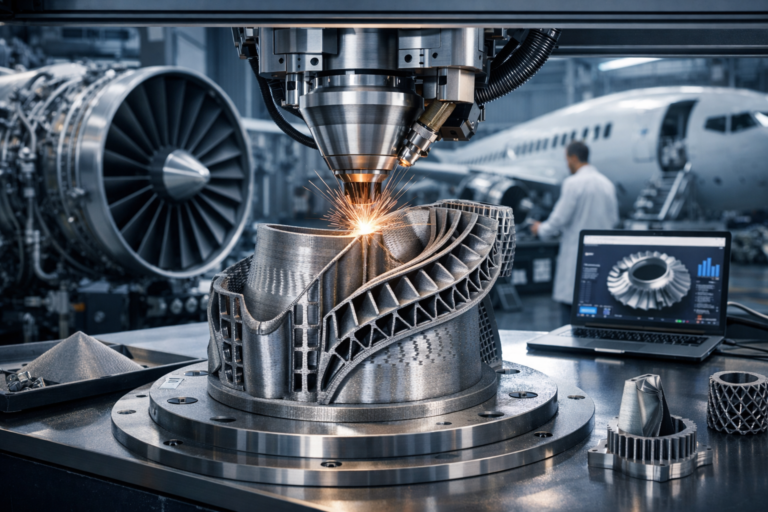
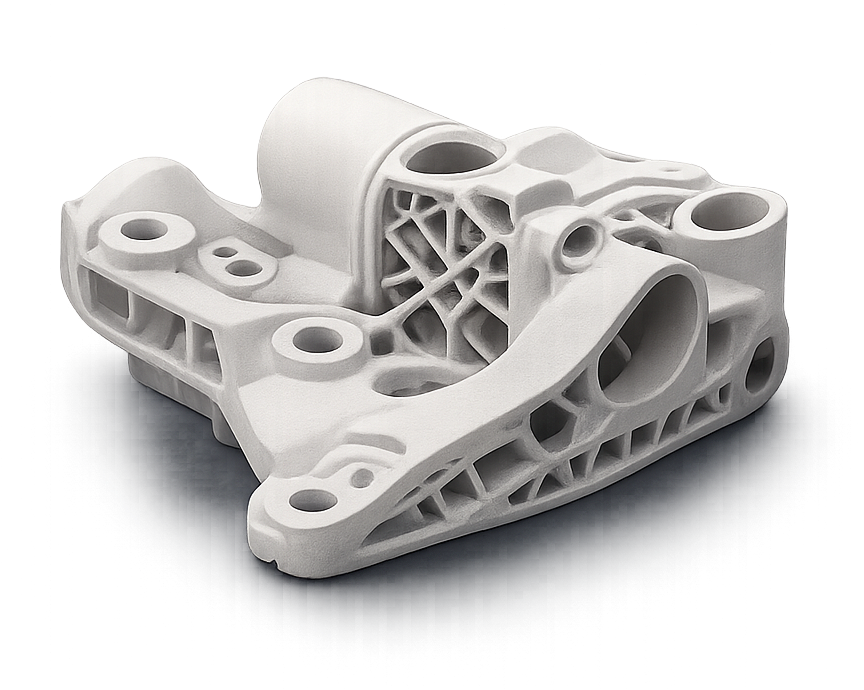
Selective Laser Sintering (SLS) is a powder-bed fusion process where a high-power laser selectively fuses polymer powder layer by layer to form solid parts.

±25μm

Accuracy

24–48hr

Turnaround

12+

Materials

500k+

Parts Delivered
Why SLS for Additive Manufacturing ?

Industrial-Grade SLS Additive Manufacturing for Functional, Production-Ready Parts

At Protofy 3D, Our Selective Laser Sintering (SLS) 3D Printing Services deliver high-strength, isotropic polymer parts designed for functional prototyping, low-volume production, and end-use applications. Using industrial SLS systems and engineering thermoplastics, we manufacture complex geometries with excellent mechanical performance—without support structures and with consistent repeatability.

Built to support both engineering development and series production.

Production-Grade SLS Infrastructure

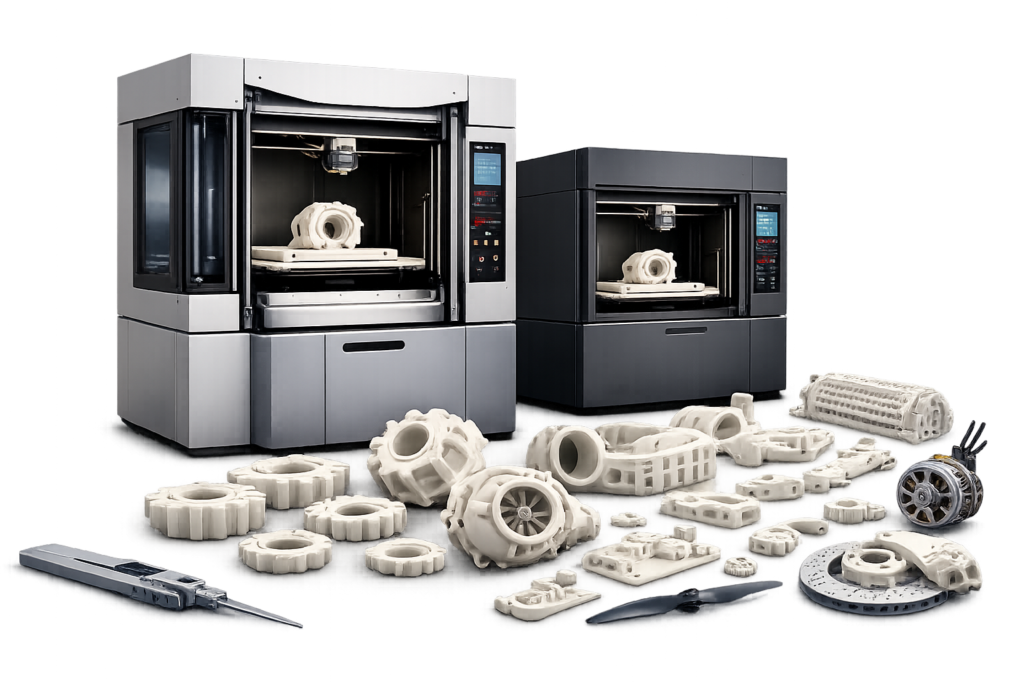
We operate industrial SLS systems designed for repeatability, dimensional stability, and batch efficiency.

Engineering-Grade SLS Materials

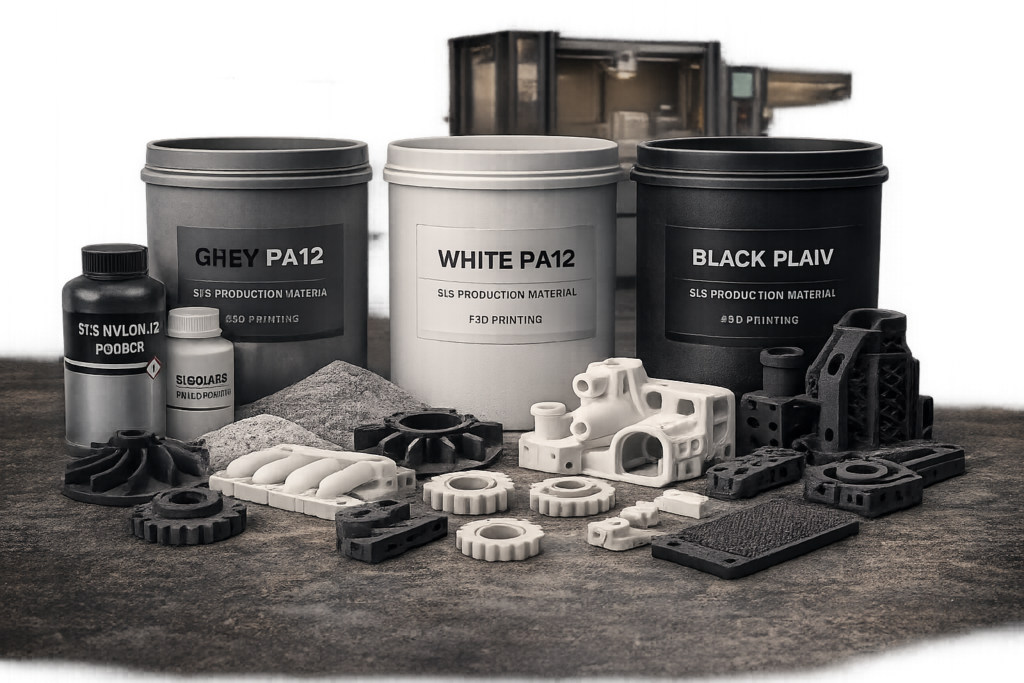
We support a range of SLS thermoplastics, including PA12 (Nylon 12), PA11, Glass-Filled Nylon.Custom material options available on request

Industrial-Scale SLS Systems

Industrial-scale SLS (Selective Laser Sintering) systems are engineered for robust performance, repeatable quality, and maximum throughput.

Design for SLS (DFAM) Support

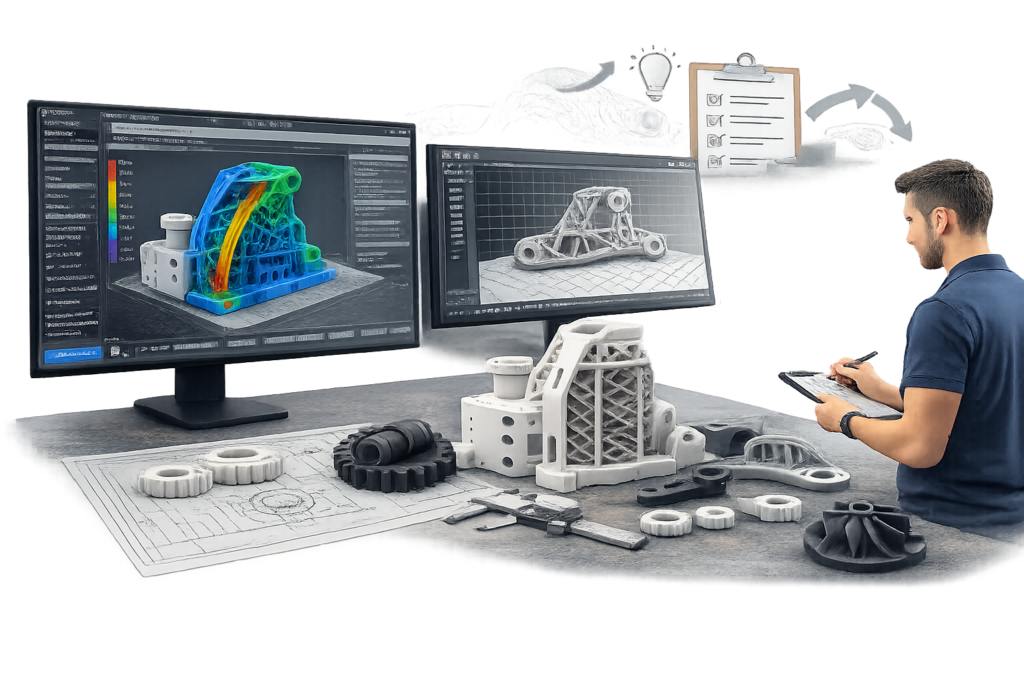
Our engineers provide Design for Additive Manufacturing support to ensure manufacturability and performance.
__SLS 3D Printing -- How It Works__

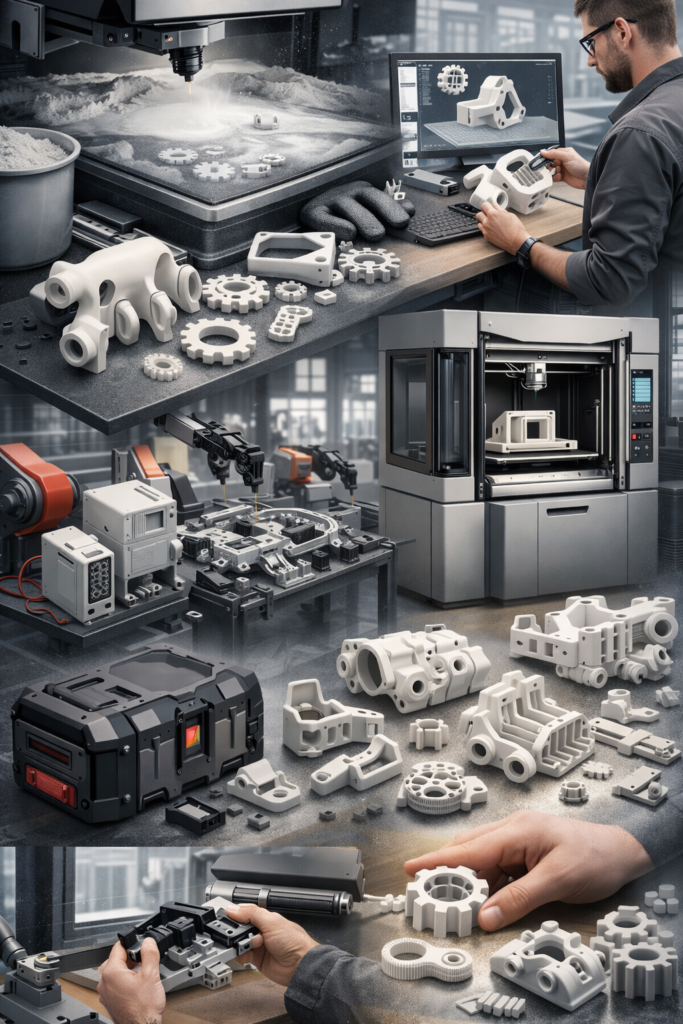
Five steps from powder to finished part.

Selective Laser Sintering streamlined workflow designed for efficiency and quality

File Preparation

Submit STL or STEP files. Our DFM engine auto-checks wall thickness, minimum features, and nesting density for optimal powder utilization.


Build Setup

Engineers configure powder bed temperature profiles, layer thickness (0.1–0.15mm), and laser scan strategies for your specific material and geometry.

Laser Sintering

CO₂ laser selectively sinters each layer at up to 10,000mm/s. Unsintered powder self-supports all features — no scaffolding required.

Breakout & Finishing

Parts are extracted from the powder cake, bead-blasted, and finished. Optional dyeing, painting, and secondary machining available.


Delivery

Fast, secure shipping gets your finished parts back to you quickly.

Why Partner with Us for SLS Manufacturing

Production-Grade Polymer Parts Selective Laser Sintering Capability

Our SLS 3D printing services deliver production-ready polymer components with high mechanical strength, geometric freedom, and batch consistency.

__Why Choose Us__ The SLS Manufacturing Advantage

Advanced SLS-Manufacturing Infrastructure. Measurable Results

EOS & Farsoon machines. Measurable precision. Our industrial SLS fleet runs 24/7 on EOS and Farsoon systems — calibrated to ±0.1mm on every build, every material, every time.

BENEFITS

  • No support structures needed
  • Strong functional parts
  • ComplAex geometries
  • Good mechanical properties

LIMITATIONS

  • Matte surface finish
  • Powder handling required
  • Comparatively Expensive
  • Slightly brittle and Can absorb moisture
BUILD_VOLUME
LAYER_THICKNESS
LASER_TYPE
SCAN_SPEED
DIMENSIONAL_ACCURACY
SURFACE_ROUGHNESS
AVAILABLE_COLORS
FILE_FORMATS
STANDARD_LEAD_TIME
RUSH_LEAD_TIME
POST_PROCESSING
CERTIFICATIONS
__Why Engineering-Grade SLS Materials Matter__

Choose from our Engineering-Grade Selective Laser Sintering SLS Materials for Production-Grade Polymer Parts

Our Selective Laser Sintering (SLS) services offer a curated range of engineering-grade polymer materials Whether your application demands strength, stiffness, flexibility, or thermal stability, our SLS material capability supports functional prototypes, end-use parts, and low-to-medium volume production.

SLS 3D Printing Material Comparison

MaterialMechanical StrengthFlexibility / ImpactThermal PerformanceBest Use Cases
PA12 (Nylon 12)High, balancedModerateGoodEnd-use parts, housings, snap-fits, ducts
PA11 (Nylon 11)HighHigh (ductile)ModerateClips, flexible parts, wear-resistant components
Glass-Filled PA12Very high stiffnessLowHighStructural parts, brackets, automotive components
Mineral-Filled NylonHigh rigidityLowExcellent stabilityPanels, covers, precision housings
Alumide® (Metal-Filled Nylon)ModerateLowModerateRigid, cosmetic, metallic-look parts
__MATERIAL SELECTION__

SLS-grade engineering polymers for every application.

Premium laser sintering powders with full material data sheets, mechanical testing reports, and industry certifications. All materials are production-qualified with consistent lot-to-lot performance. Not sure which nylon is right for your load case? Our engineers will analyze your geometry and environment and recommend the optimal SLS material.

SLS Materials We Offer

Selective Laser Sintering primarily uses high-performance nylon powders:

Note: Material selection is guided by load, environment, and surface requirements.

Applications of SLS 3D Printing

SLS delivers strong, accurate, and scalable polymer components for real-world applications.

Result: high-performance SLS parts that scale seamlessly from prototype to production.

Design Freedom with SLS (DFAM)

Our engineers provide Design Support for SLS Manufacturing to ensure manufacturability and performance.
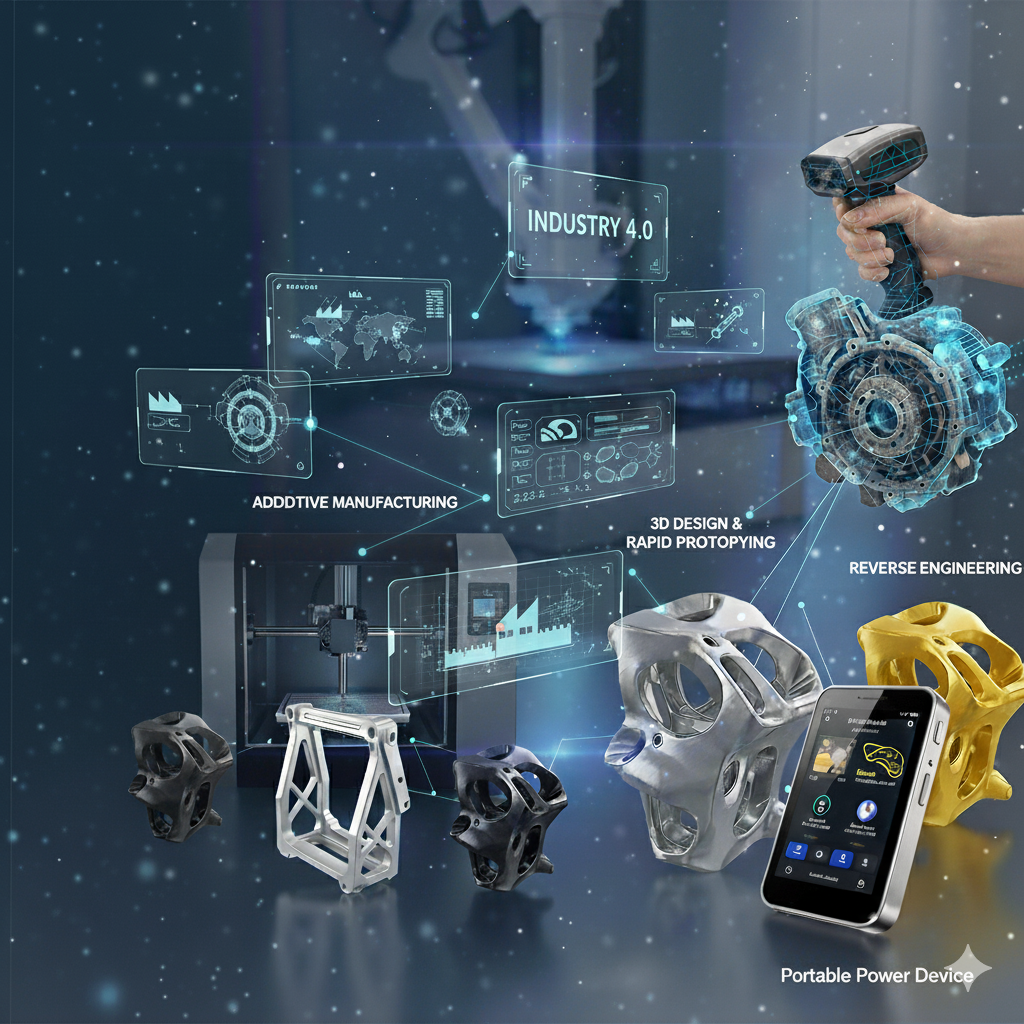
Outcome: lighter, stronger, and more functional designs—ready for production with minimal post-processing.

SLS Quality Control & Process Discipline

Consistent SLS performance is achieved through tightly controlled processes, disciplined workflows, and rigorous quality checks across every build.

Result: reliable, high-precision  repeatable, production-grade SLS parts with predictable quality and performance.

SLS for Production & Scalability

Selective Laser Sintering is designed for efficient scaling from development to repeat production—without the cost or delays of tooling.

Result: flexible, scalable SLS production with predictable cost, quality, and lead time.


SLS Surface Finishes & Post-Processing Options

Post-processing enhances the appearance, functionality, and integration of SLS parts for end-use and production applications.

Result: production-ready SLS parts with the required aesthetic and functional performance.

Validated SLS Manufacturing Capabilities for Enterprise Use

DESIGN VALIDATION TO PRODUCTION READY COMPONENTS

How to Design Parts for High-Performance SLS 3D Printing & Optimization Services

Design for Additive Manufacturing enables engineers to optimize part geometry, reduce weight, and improve performance specifically for powder bed fusion processes like SLS. hollow parts.

__SLS Design Guidelines__

The Right SLS Design Solutions at every volume.

SLS is the most geometry-friendly 3D printing process — but a few design rules will save time, cost, and ensure powder can be fully removed. 

FDM Design Guidelines
Not sure if your design is SLS-ready? Upload your file and our engineers will provide a free DFM review.

DO

Minimum wall thickness of 0.7mm for structural walls; 1.0mm recommended for reliable printing.

DO

Design hollow sections with a minimum 3mm wall for structural integrity without excess material.

DONT

Avoid walls below 0.6mm — they may not sinter fully and will be brittle.

TIPS

Unlike FDM, SLS wall thickness is independent of nozzle diameter. Sub-millimetre walls are achievable.

DO

Add at least two escape holes (≥4mm diameter) to all hollow, closed sections so unsintered powder can be removed.

DO

Place escape holes at the lowest point in the build orientation to allow gravity-assisted powder removal.

DONT

Do not design fully sealed hollow parts without escape holes — the trapped powder cannot be removed.

TIPS

For complex internal channels, discuss access strategy with our team before finalising the design.

DO

Design 0.5–0.8mm clearance between interlocking or adjacent parts printed in the same build.

DO

Hinge joints and linked chain mechanisms can be printed in-situ with 0.5mm clearance.

DONT

Do not use less than 0.3mm clearance for moving parts — powder may fuse the surfaces.

TIPS

SLS can print fully assembled mechanisms in one build — no assembly required if clearances are correct.

DO

Design holes at the nominal diameter — SLS shrinks slightly so plan on drilling or reaming for precision bores.

DO

Minimum printed hole diameter is 1.5mm. Below this, holes may close during sintering.

DONT

Don't rely on SLS for threads finer than M5 — use heat-set inserts or post-machine.

TIPS

SLS holes in the XY plane are more accurate than holes aligned with the Z axis.

DO

Embossed (raised) text with minimum 1mm stroke width and 0.5mm height prints reliably.

DO

Engraved text should have a minimum 0.5mm depth and 1mm stroke width to be readable.

DONT

Avoid text or logos below 0.8mm stroke — fine features may not sinter as distinct geometry.

TIPS

Raised text is generally more readable after bead-blasting than engraved text.

Additive Manufacturing (AM)

DO

SLS cost is volume-based (build chamber space), not support-based — nesting parts reduces per-part cost significantly.

DO

Orient thin-walled parts vertically (standing up) to avoid thermal curl on large flat surfaces.

DONT

Don't assume a single orientation is always optimal — our team will nest and orient for minimum cost and maximum quality.

TIPS

Parts of different sizes can share the same build — consolidate multiple designs to save on setup charges.

Design principles to achieve strong, accurate, and production-ready SLS parts

Wall Thickness & Structural Stability

SLS allows thinner walls than many other 3D printing technologies due to powder-bed support.

Hole Sizes & Internal Channels

Powder removal and sintering behavior affect hole accuracy.

Tolerances & Dimensional Accuracy

SLS offers excellent repeatability for functional parts.

Hollow Parts & Powder Escape

Hollowing parts reduces material usage and cost.

Material-Specific Design Considerations

Most SLS parts are printed in nylon-based materials.

Post-Processing & Finishing Allowances

SLS parts are often bead blasted, dyed, coated, or machined.

Find your queries

(FAQ) SLS Questions answered by engineers.

What is Selective Laser Sintering (SLS) 3D printing?

Selective Laser Sintering is an additive manufacturing process that uses a laser to fuse powdered thermoplastic material layer-by-layer to create functional parts directly from CAD models.

A laser selectively fuses thin layers of polymer powder inside a heated build chamber. After each layer is sintered, a new layer of powder is spread and the process repeats until the part is complete.

SLS does not require support structures because unsintered powder surrounds and supports the part during printing.

SLS produces dense nylon components with strong mechanical properties suitable for functional prototypes and production parts.

Yes. SLS allows internal channels, lattice structures, and intricate geometries without requiring support structures.

What materials are used in SLS 3D printing?

The most common materials are Nylon PA12, Nylon PA11, glass-filled nylon, and carbon fiber reinforced nylon powders.

Glass-filled nylon materials contain glass particles that improve stiffness, heat resistance, and structural strength.

Yes. Carbon fiber reinforced nylon materials provide increased stiffness and lightweight structural performance.

Yes. SLS nylon parts offer strong mechanical performance and are commonly used in real-world engineering applications.

Yes. SLS nylon materials are capable of handling mechanical loads, wear, and impact in functional environments.

Why is DfAM important for SLS printing?

DfAM helps improve part performance, reduce material usage, and optimize geometries specifically for powder bed fusion processes.

Typical wall thickness ranges between 1 mm and 3 mm depending on geometry and functional requirements.

SLS parts generally achieve tolerances of approximately ±0.2 mm to ±0.3 mm.

Yes. SLS Additive manufacturing allows multiple components to be combined into a single integrated structure.

No. The surrounding powder supports the part during printing.

What surface finish can be expected from SLS printed parts?

SLS parts typically have a slightly rough, matte surface texture due to the powder-based manufacturing process.

Yes. Media tumbling, bead blasting, and vapor smoothing are commonly used to improve surface quality.

Yes. Nylon parts can be dyed into different colors to achieve consistent and uniform finishes.

Yes. Heat-set threaded inserts can be installed to provide strong and reliable mechanical fastening.

Yes. CNC machining can be used to create precision holes, threads, or critical mating surfaces.

What factors influence the cost of SLS printing?

Pricing depends on material selection, part size, build volume usage, post-processing requirements, and batch quantity.

Yes. SLS eliminates tooling costs and enables rapid iteration, making it highly cost-effective for product development.

For low quantities and custom components, SLS is more economical since no tooling is required. Injection molding becomes cost-effective only for high production volumes.

Yes. Packing multiple parts into a single build improves machine utilization and reduces cost per component.

Yes. Rapid design iteration and functional prototyping help reduce development cycles and speed up product launch.

How is quality maintained in SLS manufacturing?

Quality assurance includes machine calibration, powder monitoring, dimensional inspection, and visual quality checks.

Yes. SLS eliminates tooling costs and enables rapid iteration, making it highly cost-effective for product development.

Yes. Dimensional inspection and quality documentation can be provided upon request.

Yes. Controlled process parameters allow consistent part quality and repeatable manufacturing.

Yes. Engineering teams can assist with DfAM optimization to improve printability, performance, and manufacturing efficiency.

Blog

The standard Lorem Ipsum passage

Lorem ipsum dolor sit amet, consectetur adipiscing elit, sed do eiusmod tempor incididunt ut labore et dolore magna aliqua. Ut...

Lorem Ipsum

“Neque porro quisquam est qui dolorem ipsum quia dolor sit amet, consectetur, adipisci velit” “There is no one who loves...

Where can I get some?

There are many variations of passages of Lorem Ipsum available, but the majority have suffered alteration in some form, by...
Image feeds

Gallery Images

Our gallery showcases the precision, creativity, and innovation that 3D printing makes possible.
__TESTIMONIALS__

Engineers trust us with their critical parts.

Indium Protofy 3d transformed our prototyping workflow. Their support team is exceptional—always responsive and knowledgeable.

Naresh Singh Manager - NPD

The quality of both their printers and service is unmatched. We've reduced our production time by 60%.

Prerit Varshney Founfer - Cad Designer

Repaired Makerbot machine satisfactorily. Downtime is virtually zero. Nice Engineering staff.

Ajay Aero Scientist - Aviation

Outstanding service and quality. Their MJF parts are perfect for our production assemblies

Parvesh Kumar R&D Head

Indium has transformed our surgical planning process. The precision and turnaround time are exceptional.

Dr. Venugopal Ortho Dept.

The detail and quality of SLA castable patterns have elevated our jewelry designs significantly.

Priya Sachdeva Designer-Jewellry

The additive manufacturing solutions significantly reduced our prototype development cycle. Functional parts were delivered within days, allowing us to validate fit and performance faster than conventional machining methods.

Head of R&D Automotive OEM

Dimensional accuracy and material consistency were critical for our application. The team delivered aerospace-grade prototypes with excellent surface quality and tight tolerances. Their structured workflow and documentation process met our compliance expectations.

Senior Design Engineer Aerospace Supplier

Their rapid prototyping capabilities allowed us to refine our medical device enclosure across multiple iterations. Turnaround times were exceptional, and the design-for-manufacturing feedback was invaluable.

Founder & CTO MedTech Startup

We required rapid iteration during product development. The ability to transition from CAD optimization to production-ready prototypes under one roof streamlined our entire engineering process

Product Development Manager Drone Startup

Ready to Start Your Project?

Get an instant quote by uploading your CAD files. No account required.

    Drop CAD files here or click to browse


    Supported formats: .stl, .step, .stp, .obj, .3mf, .iges

    Maximum file size: 500MB

    Start Manufacturing

    Additive Manufacturing

    On-Demand

    Upload your Design?

    Any Questions?

    From Prototyping to Production, Indium has the technology and capabilities to get your project off the ground.
    Scroll to Top